Last Updated on by Azib Yaqoob
You install Meta’s app on Shopify, click connect, and the pixel won’t link. Or it links, but Events Manager shows no purchases. Or it shows twice as many purchases as Shopify. These are the problems I see most often, and how to fix each one.
First, a quick note on how it works today: Shopify connects to Meta through the Facebook & Instagram app (the Meta sales channel). You no longer paste pixel code into your theme. If someone did that in the past, that old code is often the cause of the problem.
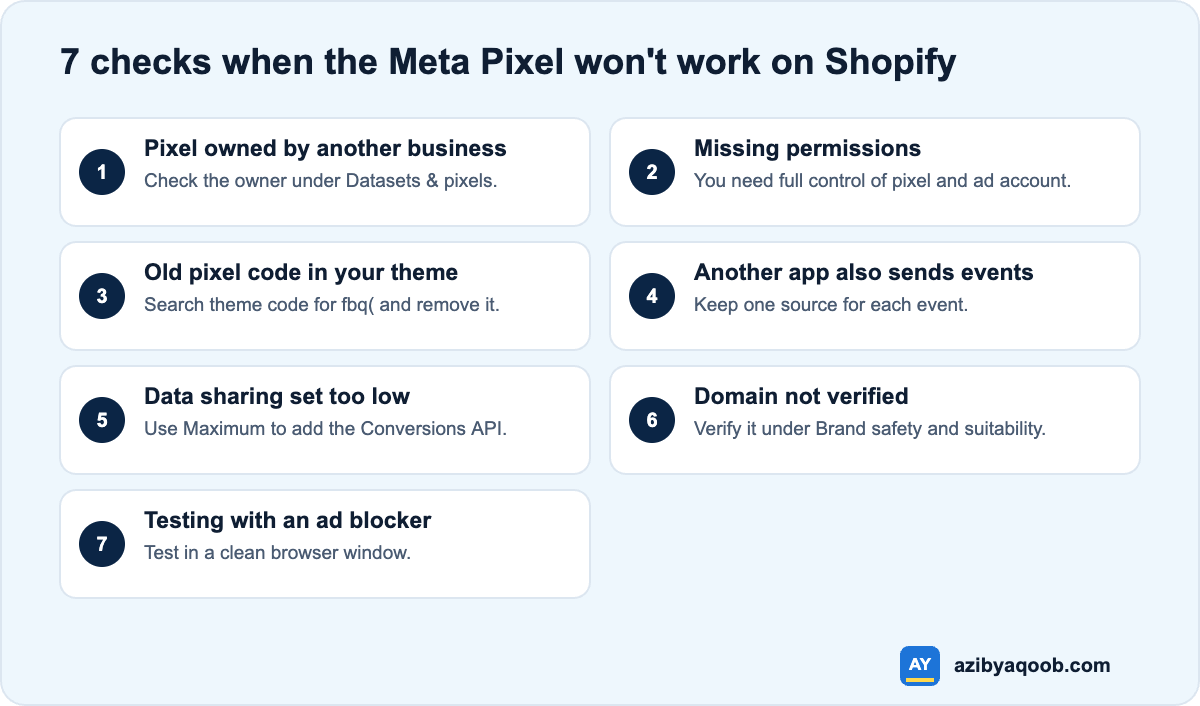
Table of Contents
1. The pixel belongs to a different business portfolio
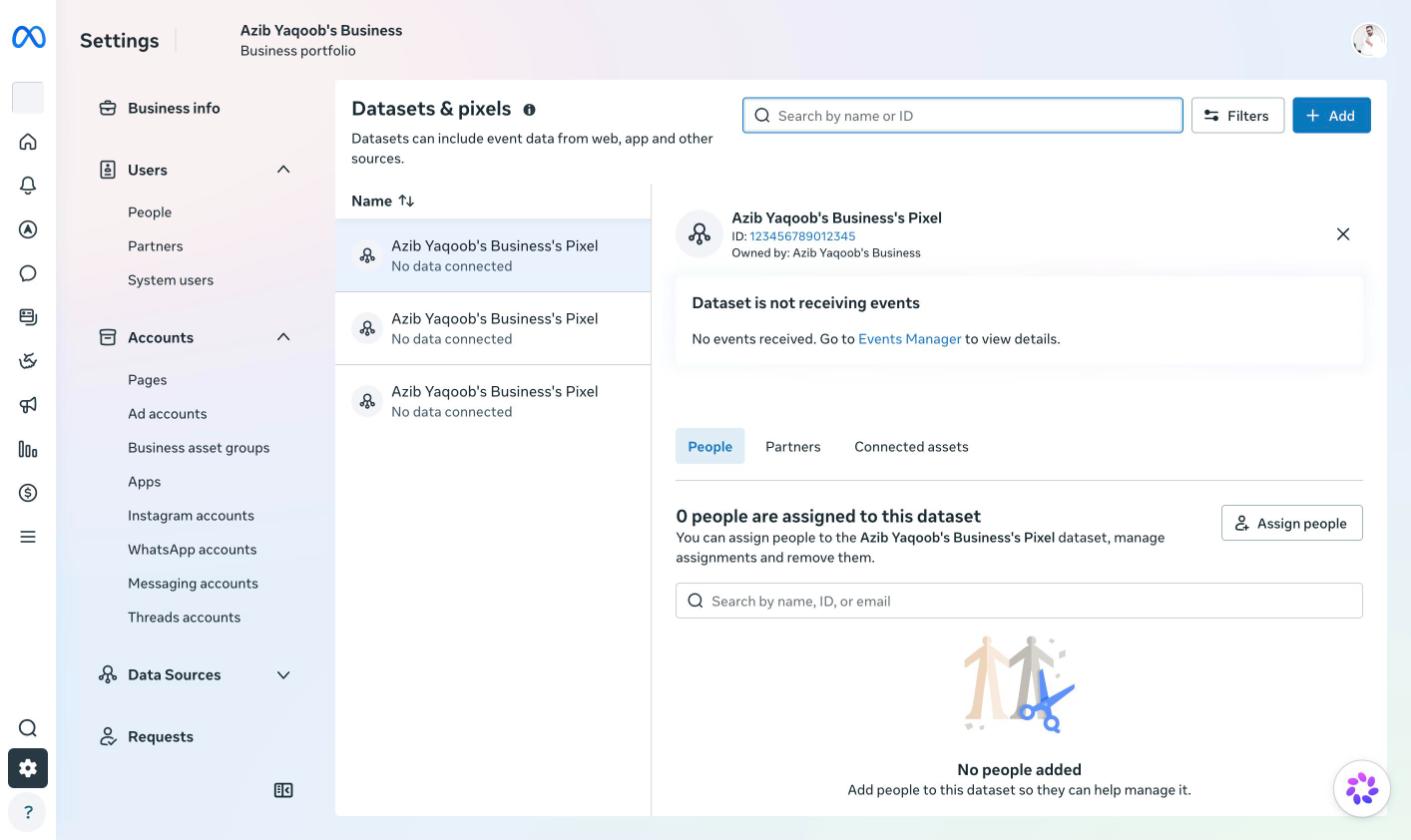
This is the most common reason the connection fails. Your pixel (now called a dataset) might be owned by a different Meta business portfolio than the one you’re connecting, often an old agency’s or a freelancer’s account.
Fix: in Meta Business Suite, go to Settings → Data sources → Datasets & pixels and check which business portfolio owns the pixel. Connect the app using that portfolio, or ask the owner to share the pixel with your business with full control.
2. You don’t have the right permissions
The person connecting the app needs admin access to the business portfolio and full control of the pixel and the ad account. Partial access lets you start the setup and then fails partway through.
Fix: ask a business admin to give your personal account full control, or have them connect the app themselves.
3. Old pixel code is still in your theme
If a pixel was added to theme.liquid years ago, the app and the old code both send events. You get duplicate purchases, or the app refuses to set up cleanly.
Fix: search your theme code for fbq( or connect.facebook.net and remove any old pixel code. Back up your theme before editing.
4. Another app or custom pixel is sending events too
Review apps, upsell apps and tracking apps often add their own Meta tracking. Shopify also lets you add custom pixels under Settings → Customer events.
Fix: list every app and custom pixel that sends data to Meta. Keep one source for each event. If you want a dedicated tracking app, turn off the duplicate tracking in the Meta app, or the other way round.
5. Data sharing is set too low
In the Facebook & Instagram app’s settings, data sharing can be set to Standard, Enhanced or Maximum. Maximum adds the Conversions API, which sends events from Shopify’s servers as well as the browser. Without it, ad blockers and browser privacy settings stop a share of your events.
Fix: set data sharing to Maximum, and make sure your cookie banner settings allow it.
6. Your domain isn’t verified
An unverified domain can limit how Meta uses your events for ads.
Fix: in Meta Business Suite, go to Settings → Brand safety and suitability → Domains, add your store’s domain and verify it. The DNS method works for most Shopify stores.
7. You’re testing with an ad blocker on
Ad blockers and some privacy browsers block the Meta pixel. Testing with one turned on makes a working setup look broken.
Fix: test in a normal browser window with extensions turned off.
How to check it’s working
- In Events Manager, open your pixel and go to Test events.
- Visit your store, add a product to the cart and start checkout. Each event should appear once.
- For purchases, check that each one shows as received from both browser and server, and is deduplicated. If a purchase appears twice, two sources are sending it.
- Over a week, compare Meta’s reported purchases with your Shopify orders for the same dates. They won’t match exactly, because Meta only counts purchases linked to your ads, but big gaps or sudden changes mean something is wrong.
Related: Meta Pixel vs Conversions API: do you need both?
Still not working? I fix Meta Pixel and Conversions API setups on Shopify, including duplicates and permission issues. See Meta Conversions API setup or ask for a free tracking check.